
Preview Topic 5. Emergency Kits
Emergency kits are simply a group of supplies put together for a specific purpose. We believe these are best utilized when compartmentalized into smaller kits, or sub kits if you will, within a kit. For instance, in your home emergency supplies kit, discussed in detail in the next lesson, you may have a first aid kit, a blackout kit for when you lose power, a water disinfection kit and other sub kits.
72 hours vs. 2 weeks vs. longer? Although 72 hours has long been the recommended amount of time to prepare for, it is no longer the standard as many industry experts and organizations now recommend 2 weeks as a much more appropriate minimum, and 30 days (or longer) is not uncommon. We believe 72 hours is appropriate in the event you have to evacuate short term, but if you are able to evacuate with 2 weeks or more supplies, do it. As Coronavirus in 2020 has taught us, supplies can diminish quickly and the likelihood of another pandemic or other disaster is not a question of ‘if’, but a question of ‘when’.
With 2 weeks as a minimum, 30 days or longer is achievable with a solid skill set and emergency plan. The decision is up to you, but we recommend you start with reasonable goals and grow from there as your confidence and skill levels evolve.
We have developed the examples provided in this course based on being able to evacuate your home and be self-reliant with 72 hours’ worth of supplies and being able to be isolated and self-sufficient in your home for 2 weeks. This is a good place to start, with 30 days or longer the long-term goal.
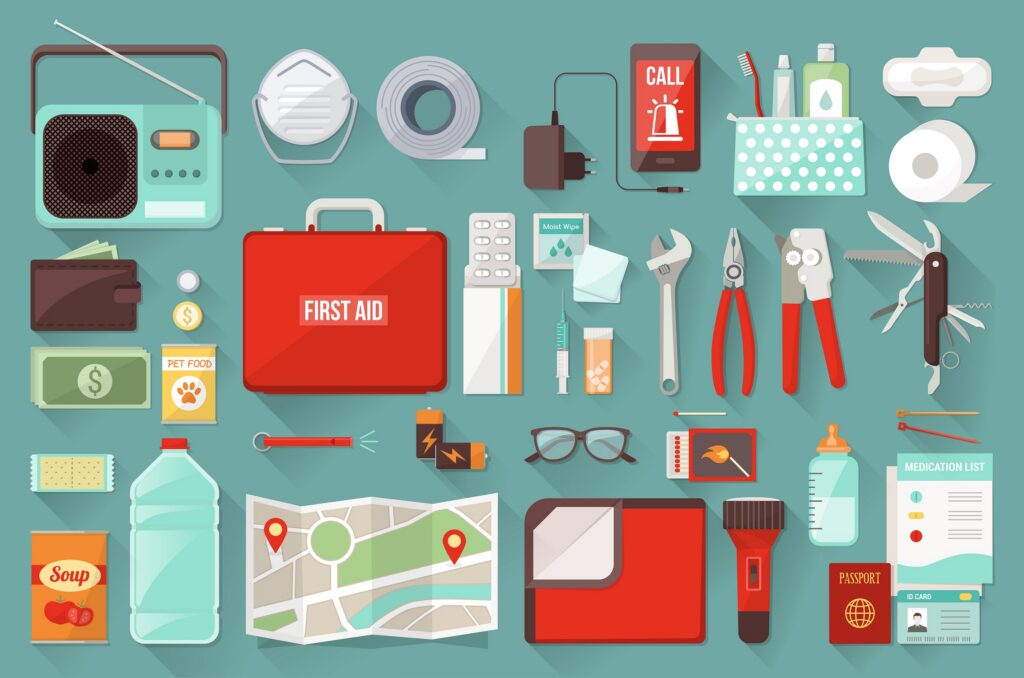
Note that both Bradley and Lundin warn against purchasing premade kits, this is perhaps best illustrated by Bradley in the example on pages 22-25. We strongly recommend you do your research and purchase supplies that are right for you.
Develop your kits over time as your budget allows. Although Bradley warns against getting too enthusiastic about checklists, we believe they serve as a tool to organize your thoughts and provide guidance as you acquire supplies. They also serve as a tool to inventory your supplies and keep track of items that may expire so you can rotate them, so they will be ready when you need them.
Though we provide checklists for the following kits, they are not intended to be a mandatory or all-inclusive list ideal for every person. They are simply items to consider including as you continue through the course.
Primary kits you will develop are:
- Home emergency supplies
- Work emergency supplies
- Car emergency supplies and Get Home Bag
- Everyday carry supplies
- Bug Out Bag
And within these kits will be smaller kits such as:
- Shelter kits
- Water disinfection kits
- First aid kits
- Fire starting kits
- Personal protection kits
It is critical to organize and inventory your kits regularly. Develop a routine to inventory your kits at least every six months, if not every 90 days, paying close attention to items you need to acquire and items that need to be rotated due to expiration dates.