
Preview Topic 3. Learn about Emergency Situations
Emergency situations can start in an instant, catching you and your family entirely off guard. Being as prepared as possible should be your goal.
Although some will say to prepare for emergency situations in general, as many basic principles apply to all emergency situations, we recommend you research disasters and emergencies that have happened, and thus are most likely to happen, in your region, and prepare for any specific requirements. This applies primarily to natural disasters, but not exclusively as we know, for example, that certain areas are more likely prone to a terrorist attack.
This excellent link to the ARC provides good information on types of emergency situations and some basic guidelines. Review this information and do research on your region to define the most probable disasters you will encounter and put them on the top of your list of things to specifically prepare for. While natural disasters such as floods and tornados are quite common emergency situations in the United States, review the other scenarios on the ARC site no matter how unlikely they may seem.
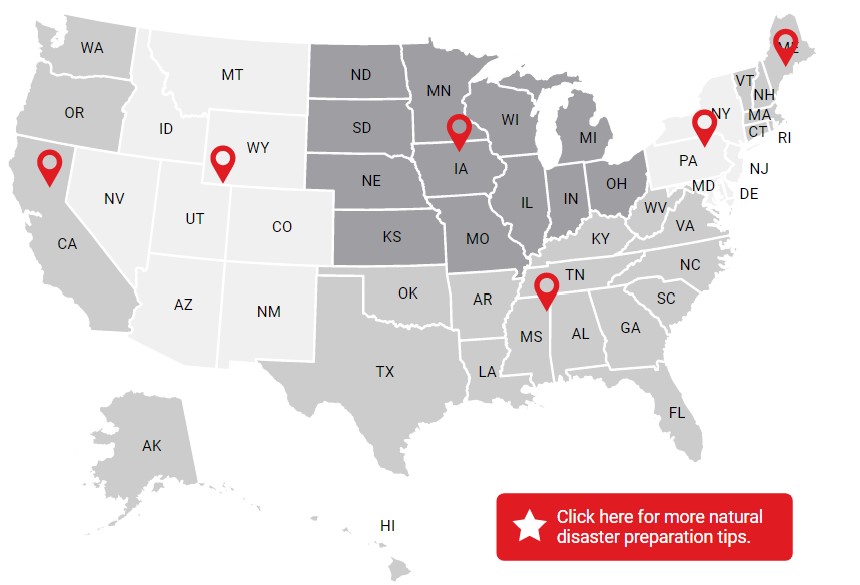
Click on the map below to a page on the ARC website that provides some information on common disasters across the U.S. based on region.
FEMA also has an excellent website, Protective Actions to Prepare for Many Types of Disasters that is part of it’s Preparedness Community, that provides information on how to prepare for a many types of disasters. Each disaster has a downloadable document you can share with your tribe.

Check with your states’ government website for information specific to natural disasters, and other emergency situations, that are probable in your region. Most states have a significant number of resources available such as this link to Michigan’s MIReady or Missouri’s Ready In 3 initiatives. Both examples provide numerous resource links as well as the video below offered on Missouri’s site. Note that each state’s resources may be in a different department so search your government website for key words like preparedness, ready, disasters, etc. If you are having trouble, contact your local congressperson and ask them directly.
Beyond the natural disasters that we are familiar with, we have other, potentially much more serious, emergency situations to consider. Bradley devotes considerable space to an EMP event in Chapter 19 to Electromagnetic Pulses and Solar Storms. He is an expert resource on EMPs and considerable resources can be found on his site Disaster Preparer. Many believe these severe storms have a much higher possibility of occurring now more than ever before, and the consequences could be catastrophic. Consider also that many countries have developed or are developing weapons specifically designed to deliver an EMP strike.
Cyberattacks to critical infrastructure can also be added to this list. Consider the entire electrical power grid down across the United States, resulting in almost all electronic equipment rendered unusable. Additionally, sophisticated cyberattacks are an ever-increasing way of life, also capable of taking down our power grid in present day. Ted Koppel, the highly regarded news reporter, has researched and written a book titled “Lights Out: A Cyberattack, A Nation Unprepared, Surviving the Aftermath” that is a very good book describing the feasibility and possibility of a cyberattack disabling the electrical power grid in the United States.
The opening page outlines the reality of a long term loss of power:
“Darkness. Extended periods of darkness, longer and more profound than anyone now living in one of America’s great cities has ever known.
As power shuts down there is a darkness and the sudden loss of electrical conveniences. As batteries lose power, there is a more gradual failure of cellphones, portable radios, and flashlights.
Emergency generators provide pockets of light and power, but there is little running water anywhere. In cities with water towers on the roofs of high-rise buildings, gravity keeps the flow going for two, perhaps three days. When this runs out, taps go dry, toilets no longer flush. Emergency supplies of bottled water are too scarce to use for anything but drinking, and there is nowhere to replenish the supply. Disposal of human waste becomes a critical issue within days.
Supermarket and pharmacy shelves are empty within a matter of hours. It is a shock to discover how quickly a city can exhaust its food supplies. Stores do not readily adapt to panic buying, and many city dwellers, accustomed to ordering out, have only scant supplies at home. There is no immediate resupply, and people become desperate.”

Leon Panetta, Former U.S. Secretary of Defense and CIA Director writes, “Ted Koppel has written an important wake up call for America on the threat of a crippling cyberattack. The danger we face right now is great, but so is the failure to acknowledge that the threat exists at all.”
Michael Mabee’s book, “The Civil Defense Book” offers some sobering information on how long the US Congress has known about the vulnerability of our electrical grid and what little has been done to protect it. For a fictional account of an EMP strike, based on factual information, William R. Forstchen’s book, “One Second After,” [complete with an introduction by former Speaker of the House Newt Gingrich] is a excellent book and a very highly respected account of how catastrophic and EMP strike on the United States would be.
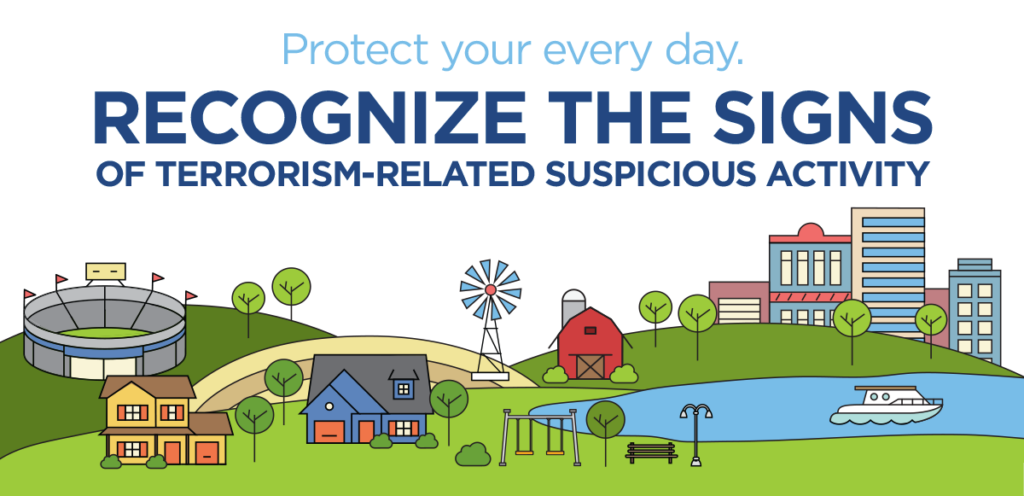
The Department of Homeland Security provides information on recognizing terrorist activities and how to react here:
Regardless of the cause or type of event, it is important to remain calm and have the ability to evaluate the situation. The list below outlines things you should immediately assess in an emergency situation.
Just as we cannot expect to be 100% prepared for every conceivable emergency situation, we cannot expect to anticipate every possible emergency situation. This illustrates one of the core goals of this course: Develop a thorough understanding of Emergency Preparedness concepts, skills, supplies, and resources available to be prepared and self-reliant in any emergency or disaster situation.
Though the scenarios mentioned in this topic, such as loss of the power grid for a significant amount of time, would be horrific, this is not a course designed to provide a ‘doom and gloom’ approach to emergency preparedness. It is still a good idea to have an understanding of such disastrous scenarios and considering these emergency situations will help you prepare for more common emergencies such as loss of power from a storm that may last a few days or longer.